
-
 ART + DESIGNWILL TAKE YOUEVERYWHERE
-

SKILLS
UI/UX Design
(Wireframing, Prototyping, Mockups)
Graphic Design & Illustration
Adobe Creative Suite
(Photoshop, Illustrator, XD, InDesign)
Figma & Sketch
Prototyping & Interactive Design
(Adobe XD, Figma)
Responsive & Adaptive Design
(UX Pin, ASCD Tools, WW2 School, Code Pen)
Typography & Color Theory
Branding & Visual Identity
Iconography & Vector Illustration
Motion Graphics & Animation
(Adobe Animate, Blender, Adobe After Effects, DaVinci Resolve, Final Cut Pro, Adobe Premiere Pro)
Web & Mobile UI Design
Design Systems & Style Guides
TECHNICAL KNOWLEDGE
HTML, CSS
(Basic Knowledge, Hardcoded This Website)
Front-End Design Principles
Collaboration Tools
(Figma Dev Mode)
CMS Design
(Markup Editors, WordPress, Webflow)
Design Systems, Not Stuff.USER EXPERIENCE
User-Centered Design
User Research & Persona Development
Usability Testing
Accessibility & Inclusive Design
Navigation Design
CRITICAL THINKING
Attention to Detail
Problem-Solving
Time Management
Collaboration & Teamwork
Adaptability & Willingness to Learn
Communication & Presentation Skills
FILE FORMATS
Camera Operation
(DSLR, Mirrorless, Medium/Large Format)
Working Efficiently in Challenging Environments
(Low Light, Crowds, Weather, Fast-Moving Subjects)
Lighting Techniques
(Natural, Studio, Flash, Continuous, Reflectors)
Aerial & Drone Photography


I am interested in the way people perceive and process information, and how their ability to learn may be improved by using visuals, and sound to translate complex, abstract information into concrete, experiential forms. Music is the expression of the past, and the present, and helps define the course of time. My work explores this abstract and mystery communication device, by developing visuals that assist in understanding the complex musical elements:
I have worked to translate the elements into a sign theory application and provide music educators with a highly useful visual presentation tool to improve current teaching methods. The developed pedagogy is currently in use at Eastman School of Music. The publication is introduced during the beginning stages of musical curriculums. It is my intention that it will also serve as a valuable model for other kinds of visual communication problems.


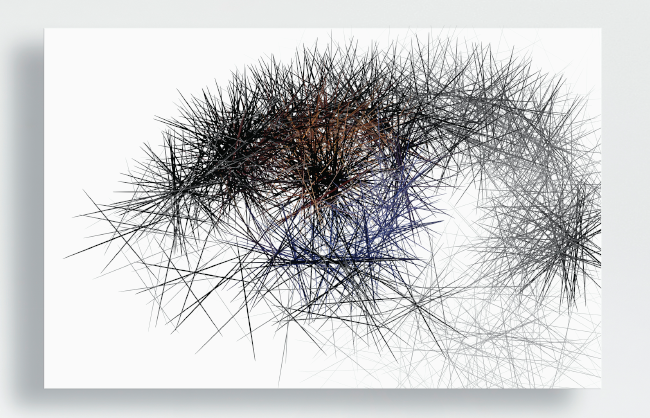
My ongoing body of work explores the cultural and ecological implications of plant genetic modification. The installation Genetically Premature Rhetoric serves as a catalyst for dialogue, inviting viewers to question the language, science, and assumptions surrounding engineered ecology. This piece marks the beginning of a growing series that continues to investigate how rhetoric and biotechnology intersect in public consciousness.
My research critically examines the narratives of food science and genetically modified organisms, raising questions about biological safety, transparency, and long-term impact. I use visual communication as a tool for public engagement, aiming to create work that informs, challenges, and activates reflection.
In these projects, I combine both freeform and structured typographic systems with layered imagery referencing gene splicing. This visual approach produces momentary impressions of instability and transformation—echoing the evolving identity of genetically modified organisms. The work encourages viewers to consider the future of our food systems and the cultural shifts that may accompany irreversible change.
National Human Genome Research Institute
The pigments that drew Martin’s interest are anthocyanins, which give blueberries, blackberries and eggplants their rich blue-purple hues. With funding from a German consortium, she set out to engineer tomatoes high in anthocyanins, aiming to increase the fruits’ antioxidant capacity
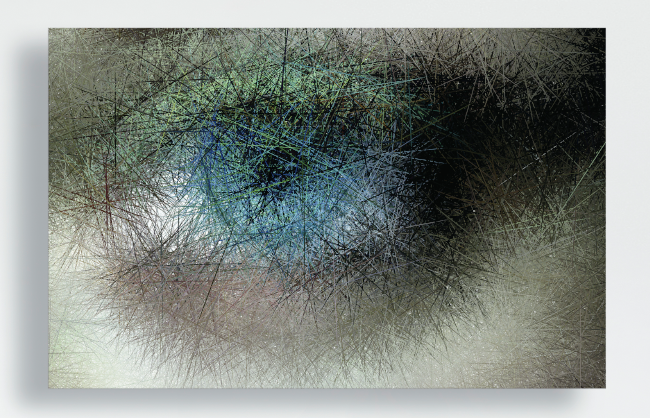
The social function of the gaze extends far beyond humans. In most social species, eye contact serves as a powerful signal of intent, conveying unspoken messages of threat, dominance, submission, courtship, and more—whether through direct gaze, gaze aversion, or shifts in eye color. Evolution has even equipped many moths, butterflies, and fish with eyelike markings, known as “eyespots,” designed to mislead or intimidate predators.
Eye contact—often termed “mutual gaze” in the study of nonverbal communication—can be unsettling because it signals that the individual looking at us intends to initiate some form of interaction. That intention may be exciting and welcome or frightening and intrusive, but in either case, another’s gaze prompts us to respond.


I am experienced with both analog and digital workflows for peripheral devices and have configured print drivers and ICC profiles to optimize print quality. I also have hands-on experience with 3D printing, the Torchmate plasma cutter, and the Universal Laser Systems laser engraver. In addition, I hold a minor in multimedia and have working knowledge of Blender, Meshmixer, Revit, and SketchUp.
PROCESS OF NELSON-ATKINS MUSEUM OF ART, ROOM COLOR SCHEMES, Zak Meek, Lee Ernst, Michele Boeckholt


